
How to Support a Military Family During Deployment

A deployment begins with one goodbye, but it changes life for everyone left behind. A service member leaves home to serve, while their family learns how to live without them.
That is where human support can make a difference. A friend who checks in, a neighbor who lends a hand, or a community that stays connected can bring comfort and practical help when a family needs it most.
Here are a few simple ways to help:
- Drop off a meal, even when there is no special occasion.
- Mow the lawn or help with another household chore without waiting to be asked.
- Offer to run a specific errand instead of saying, “Let me know if you need anything.”
- Give the parent at home a night off by offering babysitting.
- Send a care package or personal message to deployed soldiers.
- Make a habit of checking in instead of reaching out only once.
- Include military children in a countdown, holiday tradition, or small family ritual.
Even small acts of support can remind a military family that they do not have to get through deployment alone.
In this guide, you’ll find practical ways to help with everyday tasks, ideas for offering emotional support, and simple ways to stay connected with families of the deployed soldiers.
Why Supporting a Deployed Family Feels Harder Than It Should
Only 31% of military families report getting the support they currently need. Yet many people who want to support the military still hesitate to reach out wondering: What if I say the wrong thing? What if I offer help they do not need? What if I come across as intrusive?
Those concerns are understandable. In fact, they usually show that you genuinely want to help without making a difficult situation harder. The problem is that waiting for the perfect words or gesture can stop you from helping at all.
The ideas below focus on simple, low-risk ways to offer support, starting with things you can do today.
Ways to Support a Military Family During Deployment
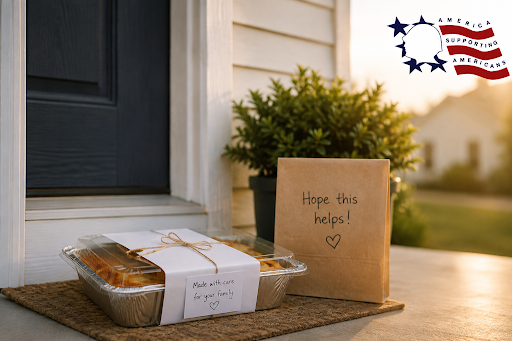
You do not need to understand military life to make someone’s day easier. Sometimes, support looks less like a big gesture and more like noticing what needs to be done and stepping in.
Each of the following actions focuses on a specific way you can make life a little easier, from helping with everyday tasks to making sure the family feels connected and supported throughout the deployment.
Share a Meal, Share a Little Care
Dinner is the first thing that gets harder when a spouse deploys. Suddenly there’s only one parent to cook, feed the kids, and clean up, all after a full day of holding everything else together too.
You don’t need a special occasion to help with this. A simple, home-cooked meal can mean more than you’d expect. Even a simple meal can remind them that someone is thinking of them and ready to lend a hand.
Before cooking, keep a few practical details in mind:
- Ask about allergies or dietary restrictions if you do not already know them.
- Make enough for the family, plus leftovers if possible.
- Choose meals that freeze well and reheat easily.
- Avoid dishes that require several steps or extra preparation.
- Label the meal with simple reheating instructions.
Sometimes, simply leave the food at their door instead of expecting them to answer or spend time talking.
Also Read: The Legacy of Joe
A Care Package to Brighten Their Day
You do not need to personally know them in order to support the families of the deployed soldiers. Reach out to local military support groups, faith communities, or family readiness organizations that can connect you with families who could use a little extra care.
Choose a theme for the package rather than filling a box with random items:
- Self-care box: Comfort items, relaxing treats, and small activities for the spouse to unwind.
- Family fun box: Games, movie-night treats, crafts, or activities the family can enjoy together.
- Practical support box: Grocery, meal delivery, or other useful gift cards that help lighten everyday responsibilities.
- Milestone package: Thoughtful items for birthdays, anniversaries, holidays, or deployment milestones.
- Kids-only box: Comfort items, toys, activities, and connection tools to help children feel closer to their deployed parents.
The best time to send a care package is when the family may need extra encouragement, such as early or midway through a deployment, or before holidays and special milestones.
For sending the care packages, use your national postal service or a courier, choose a shipping option that fits your budget and timeline, and add tracking so you can confirm the package arrives.
Give Them a Few Hours to Themselves
When a service member deploys, the spouse becomes a solo parent and handles daily routine work, carries intense emotional worry, and rarely gets true downtime.
Giving them a few hours of true uninterrupted quiet is one of the most practical, heartfelt ways to show you see their effort and want to help carry the load.
Be specific rather than saying, Let me know if you need anything.
Offer a particular day and time, such as taking the kids for a few hours or coming over to keep them occupied.
Keep it low-pressure, respect their routines and preferences, and follow through once you make the offer.
Once they agree, confirm the details in advance and make sure you are prepared with activities, snacks, and emergency contacts.
Handling the little things on your own builds deep trust, giving them complete peace of mind to truly unwind and feel comfortable accepting your support down the road.
Also Read: Top-Rated Military Charities Worth Donating to in 2026
Check In Consistently, Not Just Once
It’s easy to offer a lot of support right at the start of a deployment or during the holidays, but loneliness usually peaks in the long months between.
Real support means showing up consistently over time without taking their quiet moments personally, over-demanding their energy, or letting every conversation feel heavy and mission-focused.
The best approach is to stay in touch in small, easy ways while also making time for more meaningful connection when they are up for it:
- Low-Effort Touchpoints: Send a quick text, a short voice note, or a thoughtful postcard just to let them know you are thinking of them. Keep it pressure-free so they never feel like they have to reply.
- Deeper Connections: Set aside time for a short phone call, a walk, or a fun shared activity like watching the same show. Sometimes, simply having someone there to talk to or spend time with can make a difficult day feel a little easier.
For example, here are some sample messages to use:
- Thinking of you today! No need to reply, just wanted to send a little love and remind you you’re on my mind.
- How’s this week treating you on a scale of 1–10? I’m around if you want to vent, or if you just need a complete distraction!
- Hey, I know life is extra heavy right now. Zero pressure to text back, but I’m always here whenever you’re ready.
Include the Kids in Something That Keeps Them Connected
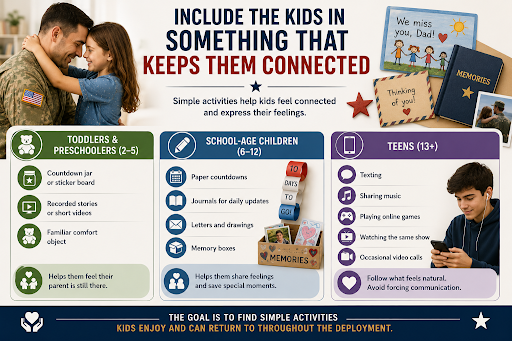
When a parent is deployed, children of all ages experience a mix of confusion, anxiety, and sadness. As the days stretch into months, the distant parent can start to feel abstract, making kids feel disconnected or insecure.
Small, ongoing activities can help them feel connected and give them a healthy way to express their feelings.
- Toddlers & Preschoolers (Ages 2–5): Choose simple, visual activities they can understand, such as a countdown jar or sticker board. Recorded bedtime stories, short videos, and a familiar comfort object can also help the deployed parent feel present in their daily routine.
- School-Age Children (Ages 6–12): Give them ways to actively participate in staying connected. Paper countdowns, journals for sharing daily updates, letters, drawings, and memory boxes can help them express feelings and save important moments to share later.
- Teens (Ages 13+): Let them choose how they want to stay connected. They may prefer texting, sharing music, playing online games, watching the same show, or occasional video calls rather than structured activities. Avoid forcing communication and follow what feels natural to them.
The goal is not to force constant communication, but to find simple activities the child enjoys and can return to throughout the deployment.
Take Over the Physical Chores They No Longer Have Time For
Supporting military families often means noticing the chores that quietly pile up when one parent is managing everything alone. Many military spouses hesitate to ask for help because they don’t want to feel like a burden or worry that they aren’t keeping up.
Start by looking at what tends to pile up when one person is managing the household alone. Yard work, deep cleaning, car maintenance, heavy lifting, and other time-consuming chores are often the easiest places to step in and make a real difference.
Choose the chores based on what they need most, for example:
- If they have young children: Help with time-consuming tasks like laundry, meal prep, yard work, or deep cleaning.
- If they work full-time: Offer help during evenings or weekends, such as errands, meal preparation, or regular cleaning.
- If they have older children or teens: Take care of heavier jobs like yard work, car maintenance, or deep cleaning.
- If they also care for another family member: Regular support, such as weekly yard work or scheduled cleaning, may be more helpful than a one-time gesture.
Your First Step: A Simple Way to Start Today
You do not need a detailed plan or a grand gesture to make a difference. Pick one small thing you can do today: send a quick text, drop off a meal, offer to handle a chore, or simply remind a military family that you are thinking about them.
The most important thing is to start. Imperfect help is still help, and one small act can open the door to ongoing support.
The family at home isn’t the only one feeling the distance. The service member overseas is missing home too, often more than they let on.
Nonprofit organizations like America Supporting Americans exist specifically to close that gap, connecting everyday supporters with deployed service members through letters, care packages, and simple reminders that home hasn’t forgotten them.
If you’d like to offer support to us and the units we connect with, reaching out is easy to start.
Frequently Asked Questions
What do military families need most during deployment?
Practical, everyday help matters most: meals, childcare, errands, and consistent emotional check-ins. Small, specific offers usually help more than big one-time gestures.
Is it better to donate money or volunteer directly?
Both help, but direct involvement (a meal, a favor, a check-in) often means more than money alone. Donating to a trusted organization is a great option when direct support isn’t possible.
How do I offer help without seeming intrusive?
Make the offer specific instead of open-ended, like naming a task or errand rather than saying “let me know.” Specific offers are far easier to accept than vague ones.
What should I avoid saying to a military spouse?
Skip clichés like “at least they’re safe” or anything political about the deployment. Simple, honest support goes further than trying to say the perfect thing.
How can I help if I don’t know the family well?
Start small: a note, a specific offer, or simply introducing yourself. You don’t need a close relationship to make a meaningful difference.
How do I explain deployment to my own kids so they understand a friend’s situation?
Keep it simple and age-appropriate: a friend’s parent is away for work and will be back, and it’s okay to miss them. Encourage kindness and patience toward that friend during this time.
What if the family says they don’t need help?
Respect their answer, but don’t disappear completely. A quiet, ongoing gesture like a text or a small favor often gets accepted even after help was initially declined.